
EMDR Therapy Online: Common Questions Answered
EMDR therapy can be provided online, but it is natural to have questions about how the process works through a screen. This guide answers common questions about virtual EMDR, including what happens during sessions, how bilateral stimulation works, how to prepare, and what to consider before getting started.

Published: October 5, 2026
Can EMDR Therapy Be Done Online?
Yes. EMDR therapy can be provided through secure virtual sessions when online care is appropriate for the person receiving treatment. The overall structure of EMDR remains the same, while some parts of the process are adapted to work in a virtual setting.
For example, instead of following a therapist’s hand across the room, bilateral stimulation may involve visual movements on a screen, guided self-tapping, or alternating sounds. The therapist remains present throughout the session to guide the process, monitor how you are responding, and adjust the pace when needed.
The EMDR International Association provides guidance for delivering EMDR virtually, including considerations around preparation, privacy, technology, informed consent, and safety.
If you are new to the approach, you can also learn more about EMDR therapy and how it may be incorporated into online psychotherapy in Ontario.
What Is EMDR Therapy?
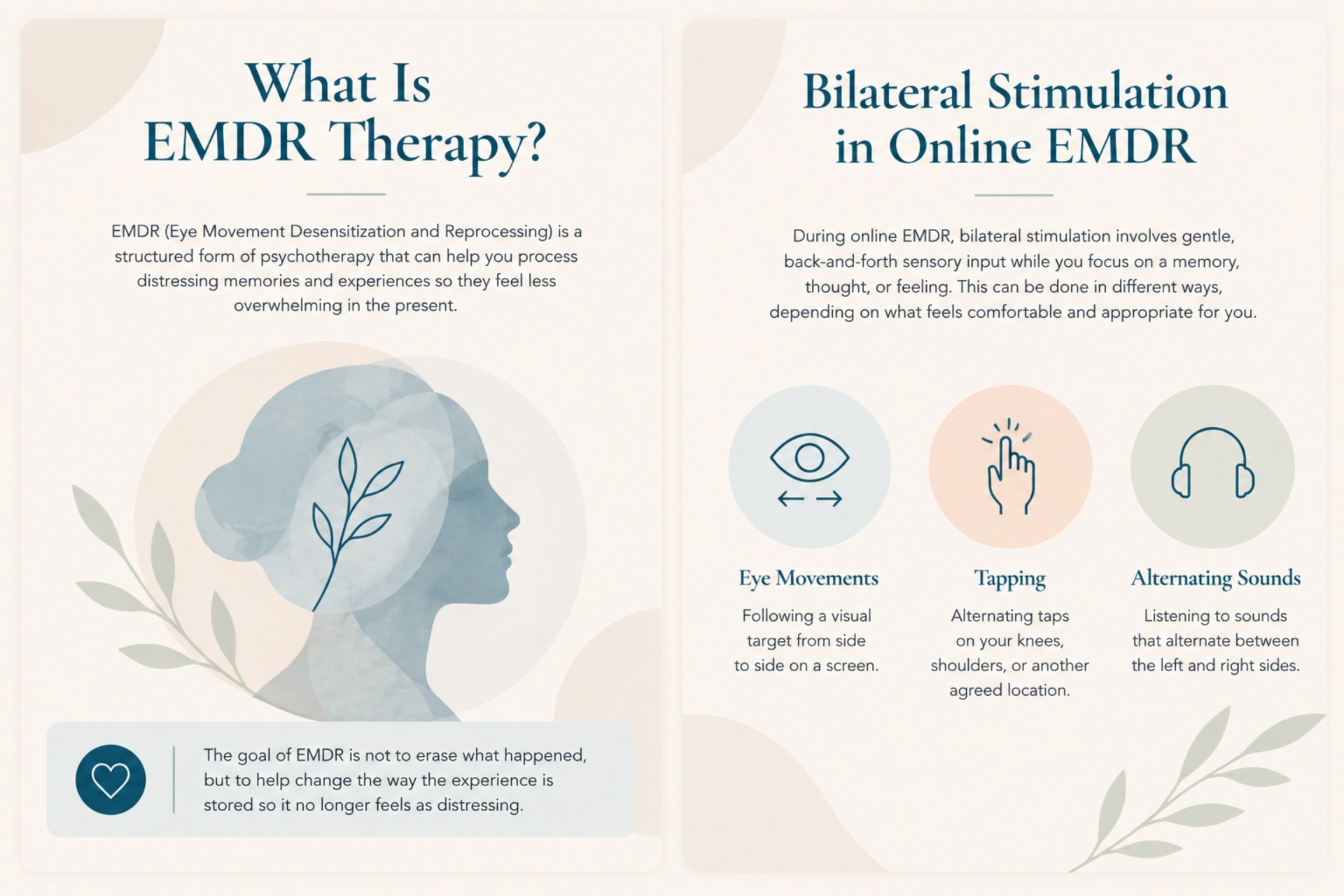
EMDR stands for Eye Movement Desensitization and Reprocessing. It is a structured form of psychotherapy developed to help people process distressing memories and experiences that continue to affect how they think, feel, or respond in the present.
During parts of EMDR therapy, you may briefly focus on a memory, image, belief, emotion, or physical sensation while also engaging in bilateral stimulation. This most commonly involves guided eye movements, alternating tapping, or sounds.
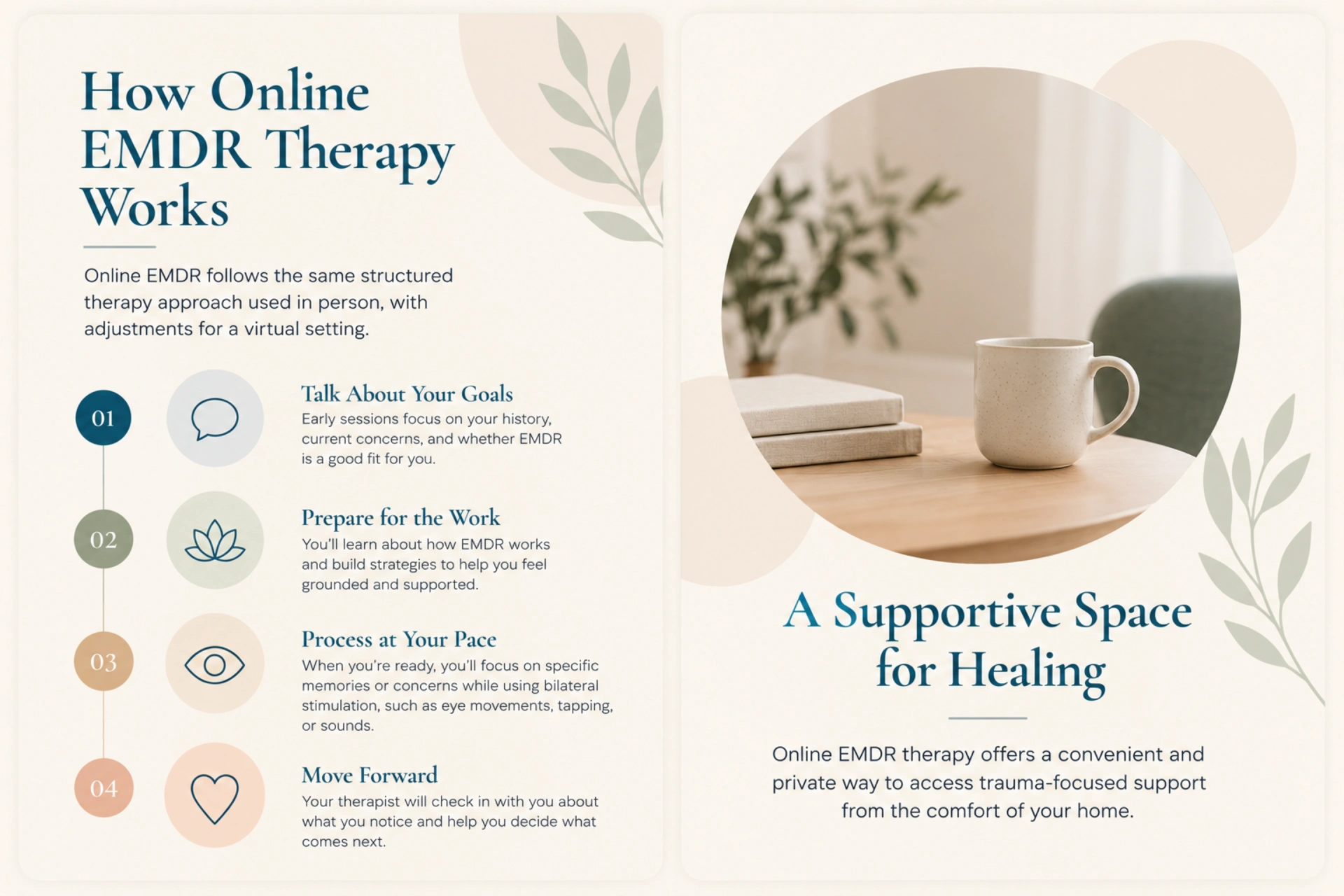
EMDR follows a structured process that includes learning about your history and current concerns, preparing for trauma processing, identifying experiences to work on, processing those experiences, and reviewing how you are responding over time.
The American Psychological Association explains EMDR therapy as a structured psychotherapy used to help people process traumatic memories. It is also included in major clinical guidelines as a recommended treatment for post-traumatic stress disorder.
How Does Online EMDR Therapy Work?
Online EMDR involves more than completing eye movements while looking at a computer screen. Before trauma processing begins, time is typically spent understanding what has brought you to therapy, discussing your history and goals, identifying appropriate areas to work on, and making sure you have strategies available to manage distress.
During the processing portion of EMDR, you may be asked to briefly bring part of an experience to mind while engaging in bilateral stimulation. After each short set, your therapist will check in with you about what you noticed and help guide what happens next.
You do not need to know where your thoughts are supposed to go or try to produce a particular response. The process is collaborative, and the therapist can adjust the pace based on what comes up during the session.
The National Center for PTSD provides an overview of EMDR, including how the approach is used as a trauma-focused psychotherapy.
What Is Bilateral Stimulation?
Bilateral stimulation refers to sensory input that alternates from one side to the other while you focus on selected parts of an experience.
Eye movements are the form most commonly associated with EMDR, but they are not the only option. Depending on what is appropriate and comfortable, bilateral stimulation during online EMDR may involve:
- Following a visual target from side to side on a screen
- Alternating tapping on your knees, shoulders, or another agreed location
- Listening to sounds that alternate between the left and right sides
- Another therapist-guided method of bilateral stimulation
The National Institute for Health and Care Excellence recognizes eye movements, taps, and tones as forms of bilateral stimulation that may be used within EMDR treatment for PTSD.
Researchers continue to study exactly how bilateral stimulation contributes to the EMDR process. It is best understood as one component of a broader, structured therapeutic approach rather than a treatment on its own.
Is Online EMDR Therapy Effective?
EMDR has a substantial body of research supporting its use for post-traumatic stress disorder. Organizations including the National Center for PTSD identify EMDR as one of several trauma-focused psychotherapies with strong evidence for treating PTSD.
The research specifically examining EMDR delivered remotely is newer and smaller than the research on EMDR overall, but the findings to date are encouraging.
A systematic review of remote EMDR studies examined research involving more than 1,200 participants. The authors found promising results for concerns including post-traumatic stress, anxiety, and depression, while also noting limitations in the available research, including small samples and differences in study quality.
This means online EMDR may be an appropriate option for some people, but the decision should still be based on individual circumstances, needs, preferences, and readiness for trauma-focused work.
Do I Have to Describe My Trauma in Detail?
Not necessarily. EMDR does not usually require you to provide a long, detailed verbal account of a traumatic event during the processing portion of treatment.
You will still need to share enough information for your therapist to understand what you are experiencing, assess your needs, and plan treatment appropriately. However, EMDR does not depend on repeatedly retelling every detail of what happened.
This can feel reassuring for people who are interested in trauma therapy but are concerned about having to describe difficult experiences in depth before receiving support.
If you are not ready to focus directly on certain memories, therapy can begin elsewhere. Trauma-focused therapy may include work on grounding, emotional regulation, coping strategies, boundaries, relationships, and understanding trauma responses before more direct processing is considered.
Will EMDR Start During My First Session?
Not necessarily.
EMDR is a phased approach, and preparation is an important part of the process. Early sessions may focus on learning more about your concerns, understanding your history, discussing treatment goals, explaining how EMDR works, and developing strategies that can help you manage difficult emotions or physical sensations.
Your therapist will also consider whether EMDR is appropriate for what you are experiencing and which memories, situations, or patterns may be useful to address.
Some people benefit from spending more time on preparation before beginning trauma processing. Others may be ready to begin sooner. The pace can be adjusted to the individual rather than following the same timeline for everyone.
Can EMDR Feel Overwhelming?
EMDR can bring up difficult emotions, memories, thoughts, or physical sensations. That is one reason preparation, pacing, and communication with your therapist are important.
A session is not something you are expected to simply push through. If the process begins to feel too intense, your therapist can slow down, pause, return to grounding strategies, change the focus, or spend more time on preparation.
Trauma-focused care should take your current circumstances and ability to manage distress into account. If you are concerned about becoming overwhelmed during EMDR, that is something you can discuss before any processing begins.
You can learn more about how therapy can approach difficult experiences gradually on the trauma-focused therapy page.
Is Online EMDR the Same as Using an EMDR App or Video Yourself?
No. Therapist-guided EMDR is not the same as watching a bilateral stimulation video, following moving dots on a website, or using a self-guided EMDR application.
Bilateral stimulation is only one component of EMDR therapy. The full process also involves assessment, treatment planning, preparation, identifying appropriate experiences to work on, monitoring responses during processing, closure, and reevaluation.
The EMDR International Association’s virtual EMDR guidance addresses the role of the clinician when EMDR is provided online.
If you are interested in EMDR, it is generally more useful to discuss the approach with a qualified mental health professional than to try to process traumatic experiences using bilateral stimulation on your own.
What Do I Need for an Online EMDR Session?
You do not need a complicated setup, but your physical environment can make a meaningful difference during virtual therapy.
Whenever possible, it can help to have:
- A private space where you can speak comfortably
- A reliable internet connection
- A computer, tablet, or other device with working video and audio
- Enough physical space to comfortably use the agreed form of bilateral stimulation
- Minimal interruptions during the appointment
- A little time before and after the session so you do not feel rushed
Privacy and safety are important considerations for virtual psychotherapy. The Ontario College of Social Workers and Social Service Workers’ Standards of Practice include requirements related to confidentiality and the delivery of professional services using technology.
You can also review the website’s frequently asked questions for more information about online therapy, appointments, and working together.
What Happens if the Video Call Disconnects?
Technology problems can happen during any virtual appointment, so it is helpful to know what the plan will be before beginning more emotionally intensive work.
Your therapist may discuss how you will reconnect, how they can contact you if the video platform stops working, and what to do if a disruption occurs while you are processing difficult material.
Planning for unexpected interruptions is part of providing virtual therapy responsibly. It also means you do not have to figure out what to do in the middle of a disconnected session.
How Long Does EMDR Therapy Take?
There is no set number of EMDR sessions that applies to everyone.
The amount of time therapy takes can depend on what you would like to work on, the number and complexity of the experiences involved, your current circumstances, your response to treatment, and how much preparation is helpful before processing begins.
For adults receiving EMDR specifically for PTSD, NICE clinical guidelines describe treatment as commonly taking place over approximately 8 to 12 sessions, with additional sessions sometimes appropriate for people who have experienced multiple traumas.
That is a clinical guideline rather than a timeline that every person’s therapy will follow. Some concerns are relatively specific, while others involve experiences and patterns that have developed over many years.
What Can EMDR Therapy Help With?
The strongest research supporting EMDR is for PTSD and trauma-related symptoms. EMDR is included in several clinical practice guidelines as an evidence-based treatment for PTSD.
People may also become interested in EMDR because difficult past experiences continue to affect areas such as anxiety, emotional triggers, relationships, self-worth, or negative beliefs about themselves.
Not every concern requires trauma processing, and not everyone coming to therapy needs EMDR. If what you are experiencing is broader, or you are not sure where it comes from, individual counselling can provide space to explore your emotions, experiences, relationships, and goals without choosing a particular therapy method in advance.
Is Online EMDR Right for Everyone?
No. Online EMDR can be helpful for many people, but it is not automatically the right approach for every person or every situation.
A therapist may consider factors such as:
- What you are hoping to address in therapy
- Your current emotional well-being and support system
- How you respond when difficult memories or emotions come up
- Whether you have enough privacy for virtual sessions
- Whether online therapy feels comfortable and accessible to you
- Any concerns that may need attention before trauma processing
- Your preferences about how you would like to approach therapy
Sometimes EMDR is an appropriate next step. In other situations, it may make more sense to begin with broader counselling, grounding, emotional regulation, or another form of trauma-focused support.
You do not need to make that decision on your own before reaching out.
How Should I Prepare for an Online EMDR Appointment?
You do not need to revisit traumatic memories or practise EMDR techniques by yourself before an appointment.
Practical preparation is usually more useful. Choose a private location, make sure your device is charged and your internet connection is working, and reduce interruptions where possible.
It may also be helpful to leave yourself some transition time after the appointment rather than scheduling something demanding immediately afterward. You may prefer to have time to get something to eat, take a walk, rest, or simply settle back into your day.
If you have concerns about the process, bring those questions with you. Asking what EMDR involves, how the therapist approaches difficult material, or what happens if you become uncomfortable is a normal part of deciding whether the approach feels right for you.
How Do I Get Started With Online EMDR Therapy?
You do not need to arrive knowing exactly what you want to process or whether EMDR is definitely the right form of therapy for you.
An initial consultation can be used to discuss what has been bringing you to therapy, what you hope will change, and what questions you have about EMDR. From there, you can explore whether online EMDR therapy, trauma-focused therapy, individual counselling, or another form of support may be an appropriate place to begin.
Have Questions About EMDR Therapy?
An initial consultation gives you an opportunity to ask questions, discuss what you are looking for, and explore whether online EMDR therapy may be an appropriate fit for your needs.
Explore Online EMDR Therapy in Ontario
If you are considering EMDR and would like to learn more about how it may fit into your care, an initial consultation is a place to start. You can ask questions, discuss your goals, and explore the approach at a pace that feels manageable.